

Based on 12 new design principles I’ve developed for HUA! New Huaren Design Movement, I redesigned posters of 12 Huaren movies. Each poster is the showcase of how I translate and visualise the key element of ancients Huaren philosophies -Confucianism, Taoism, and Buddhism.
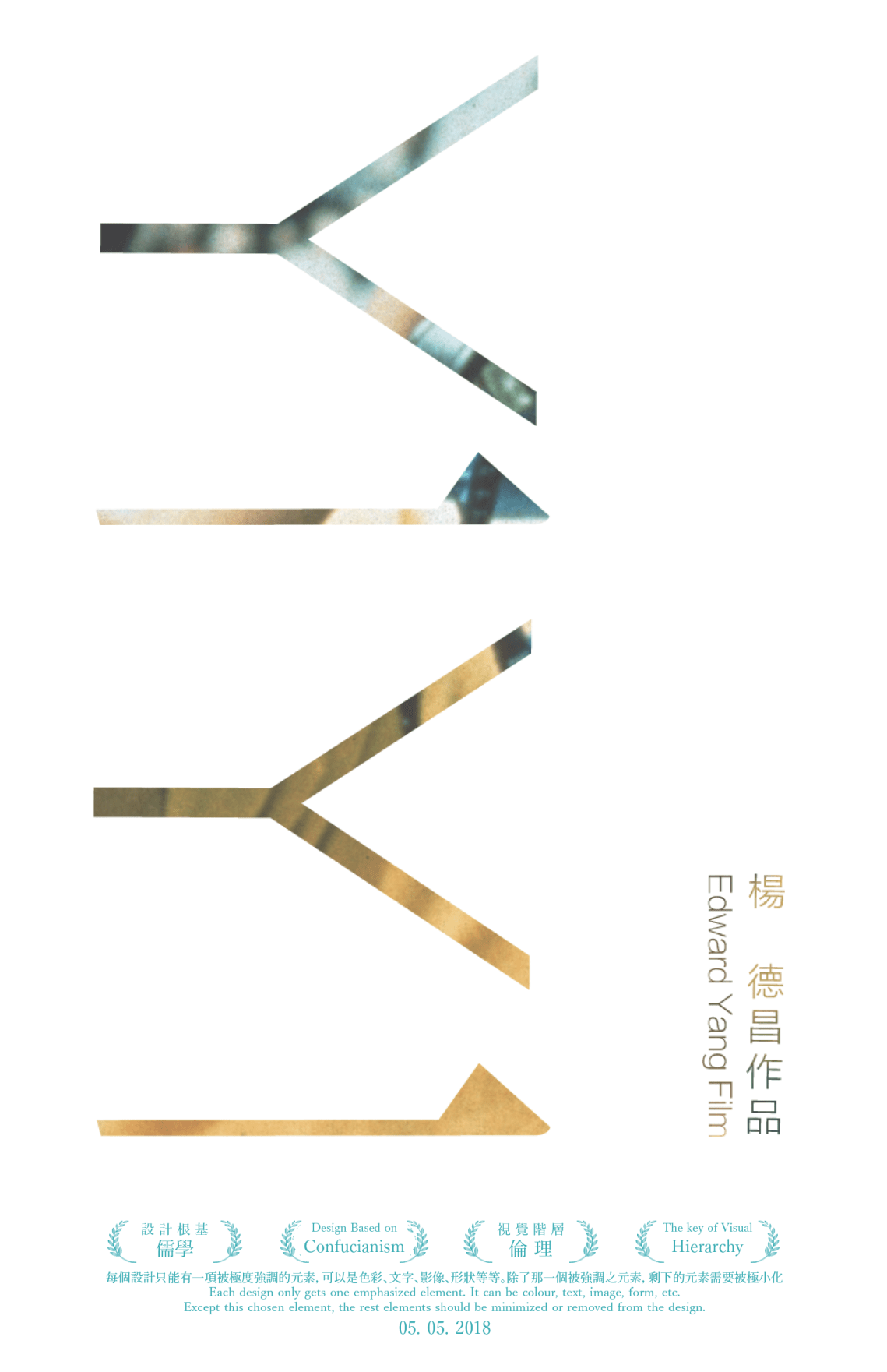
YiYi by Edward Yang (2000)
Principle #1. The Key of Visual Hierarchy
Each design only gets one emphasized element (it can be colour, text, image, form, etc). Except this chosen element, the rest elements should be minimized or removed.
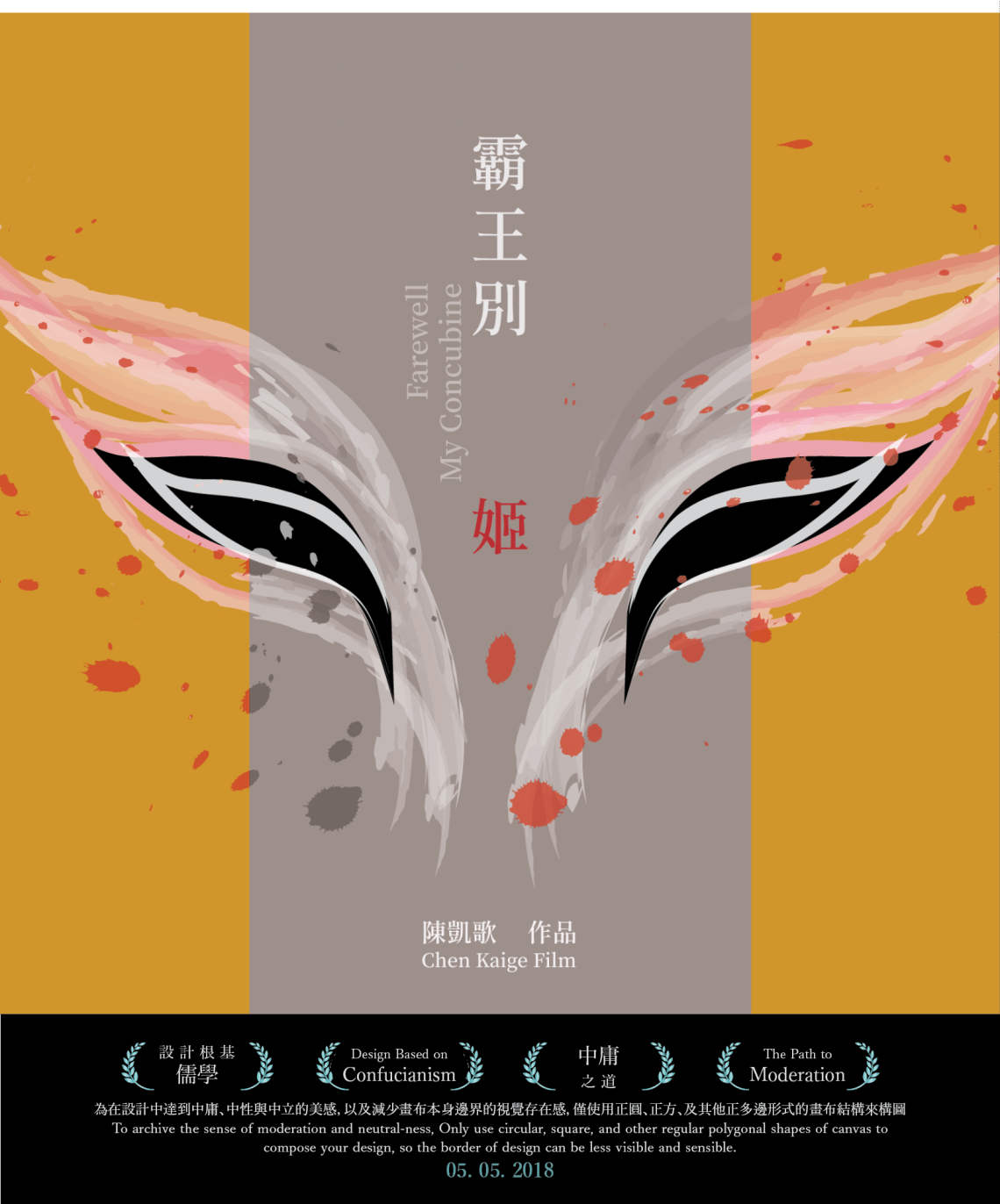
Farewell My Concubine by Chen Kaige (1993)
Principle #2. The Path to Moderation
To archive the sense of moderation and neutralness, only use circular, square, and other regular polygonal shapes of canvas to compose your design, so the border can be less sensible.
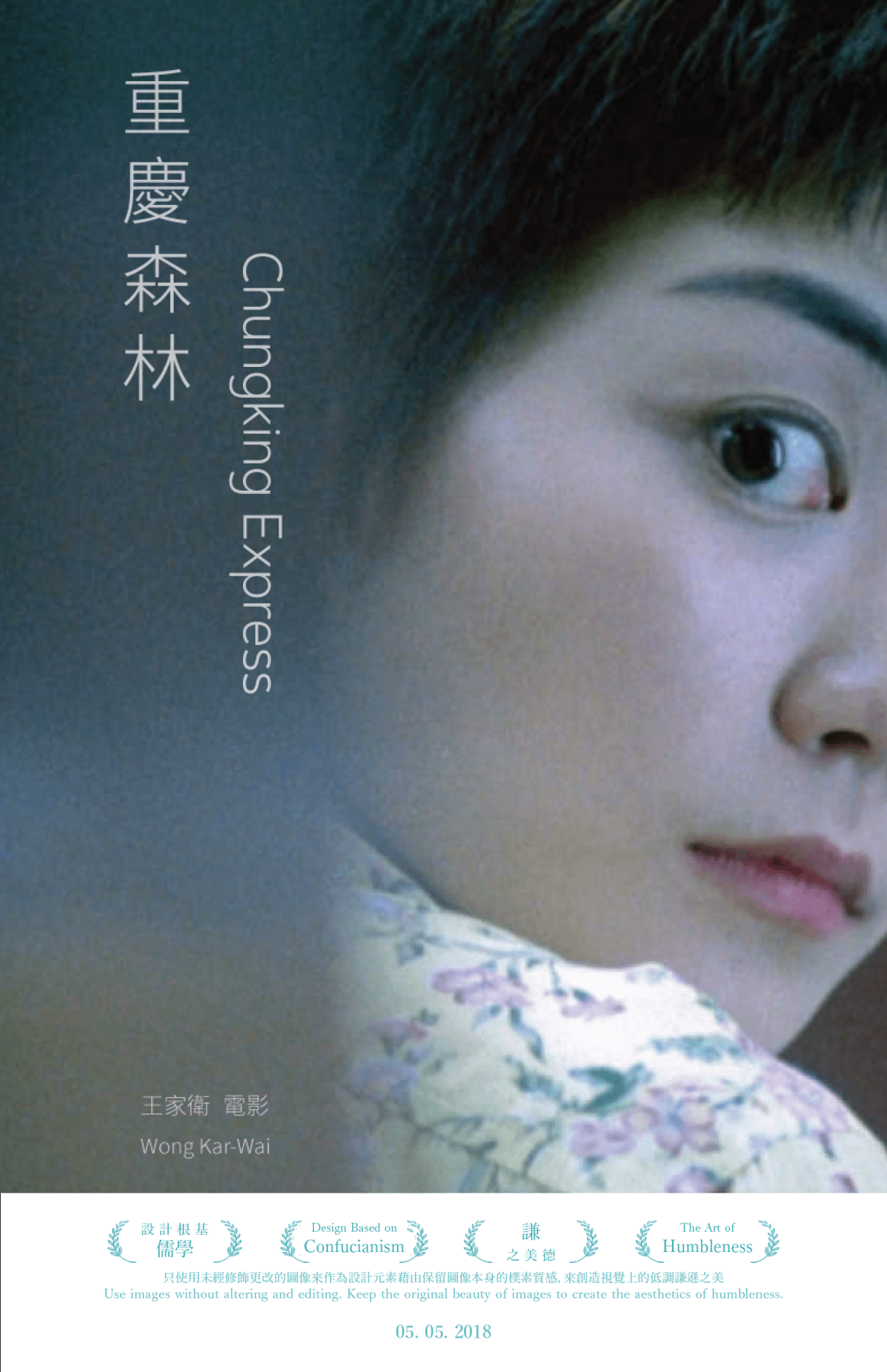
Chungking Express by Wong Kar-wai (1994)
Principle #3. The Art of Humbleness
Use images without altering and editing. Keep the original beauty of images to create the aesthetics of humbleness.
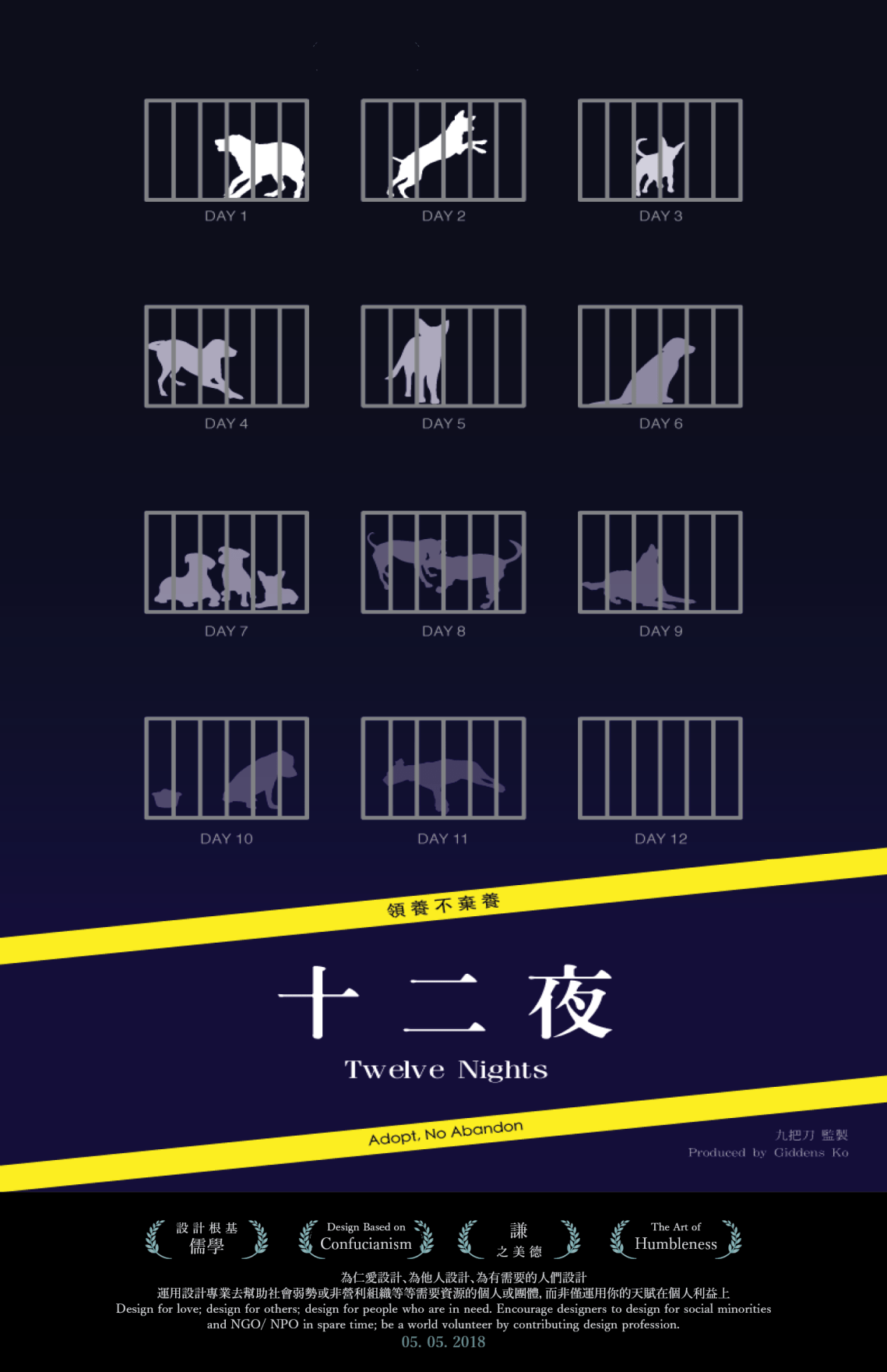
Twelve Nights by Raye (2013)
Principle #4. The King of Ren/ Benevolence
Design for love; design for others; design for people who are in need. Be a world volunteer by contributing design profession for social minorities and NGO/ NPO.
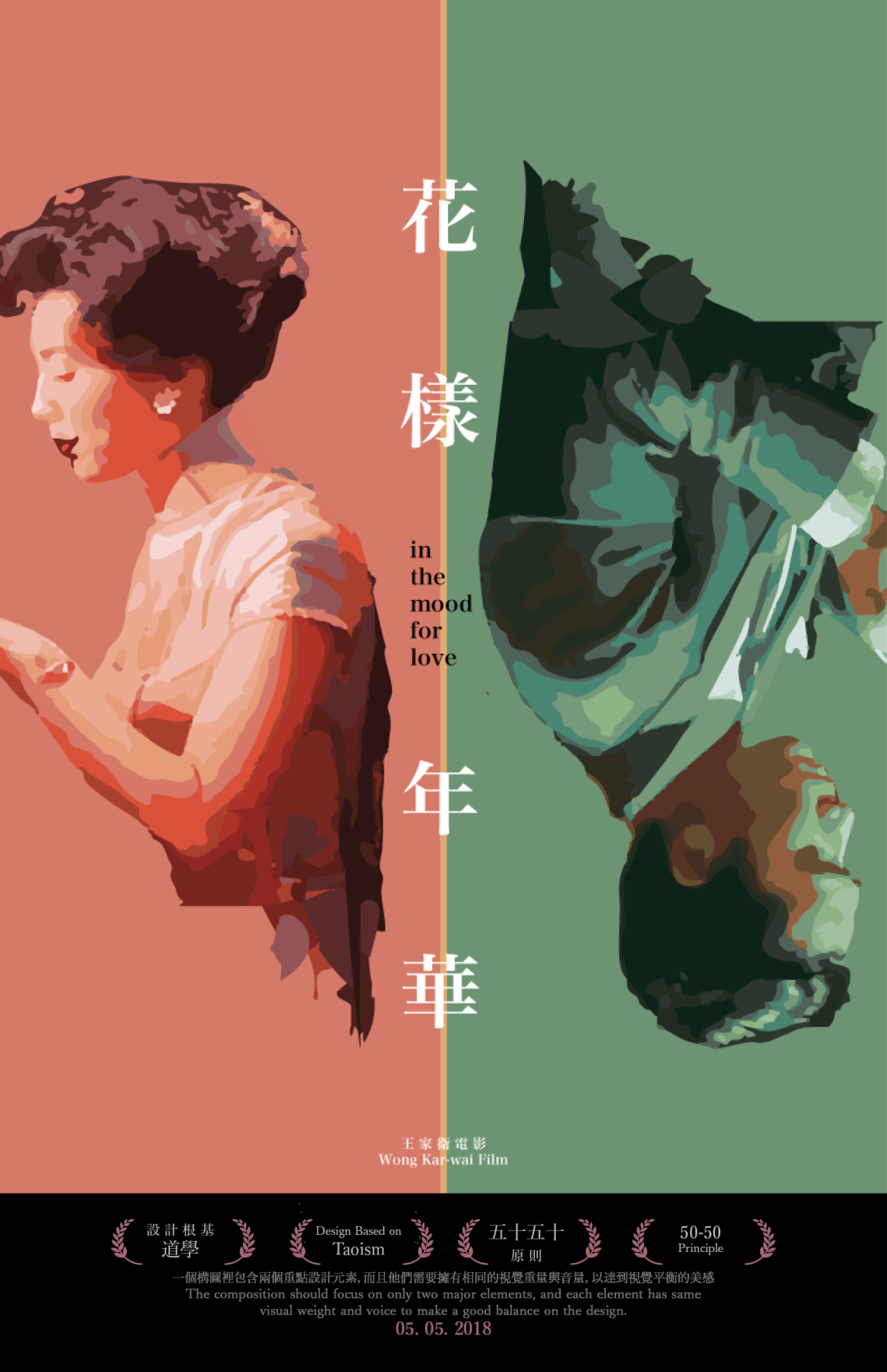
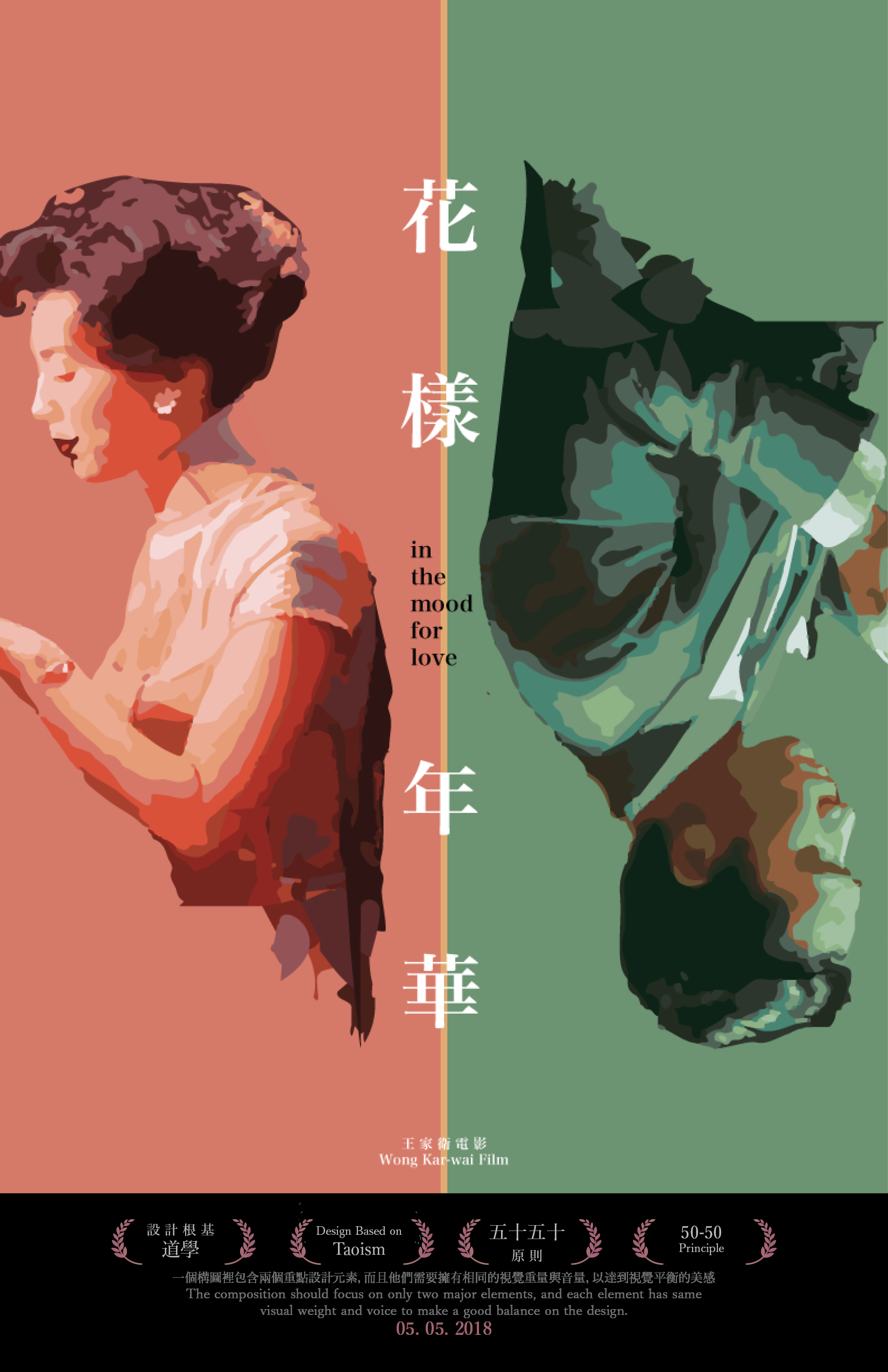
In the Mood for Love by Wong Kar-wai (2000)
Principle #5. Fifty-Fifty Principle
Only focus on two major elements in one composition. Each element should have same visual weight and volume.
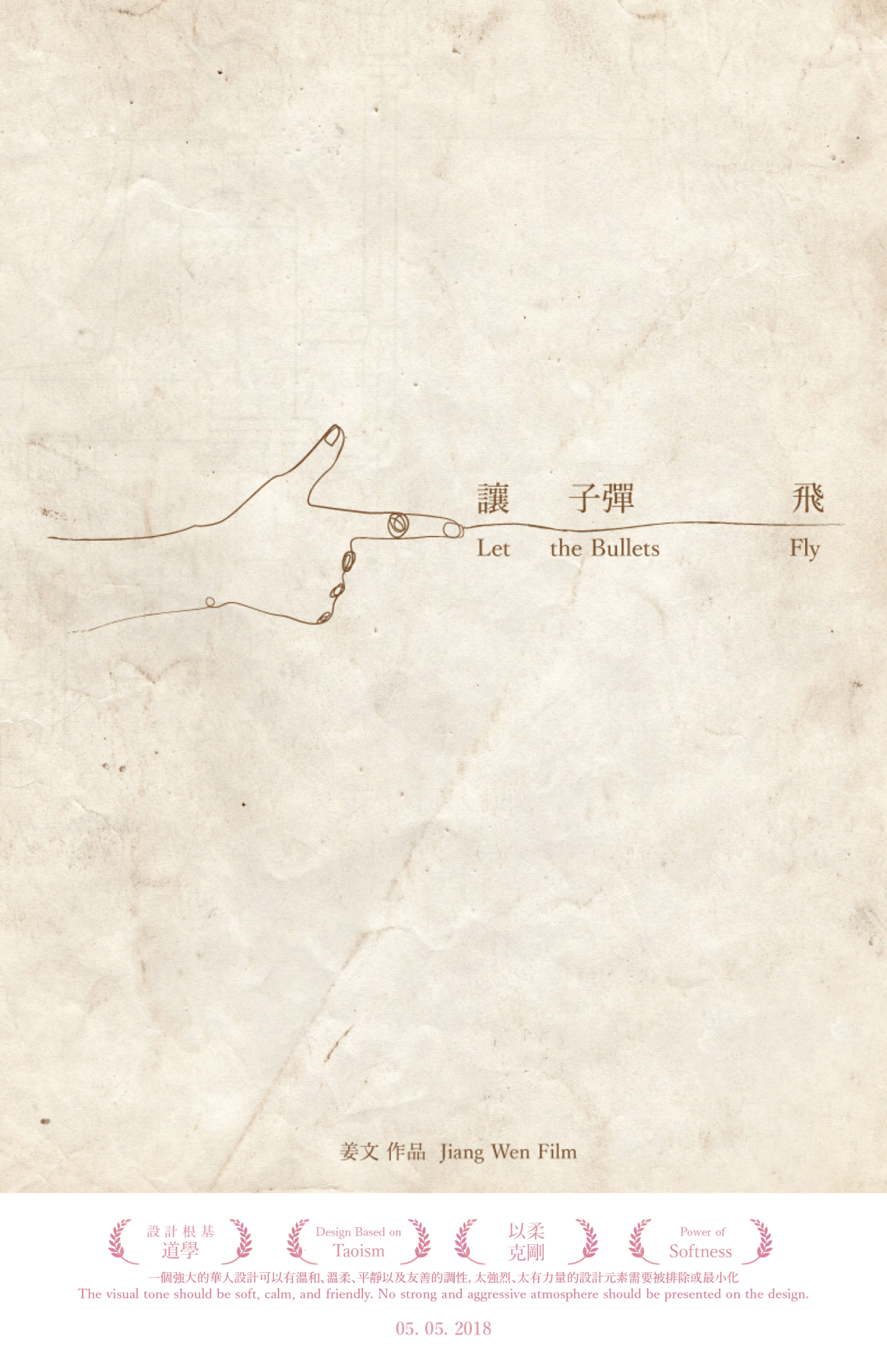
Let the Bullets Fly by Jiang Wen (2010)
Principle #6. Power of Softness
The visual tone should be soft, calm, and friendly. No strong and aggressive atmosphere should be presented on the design.
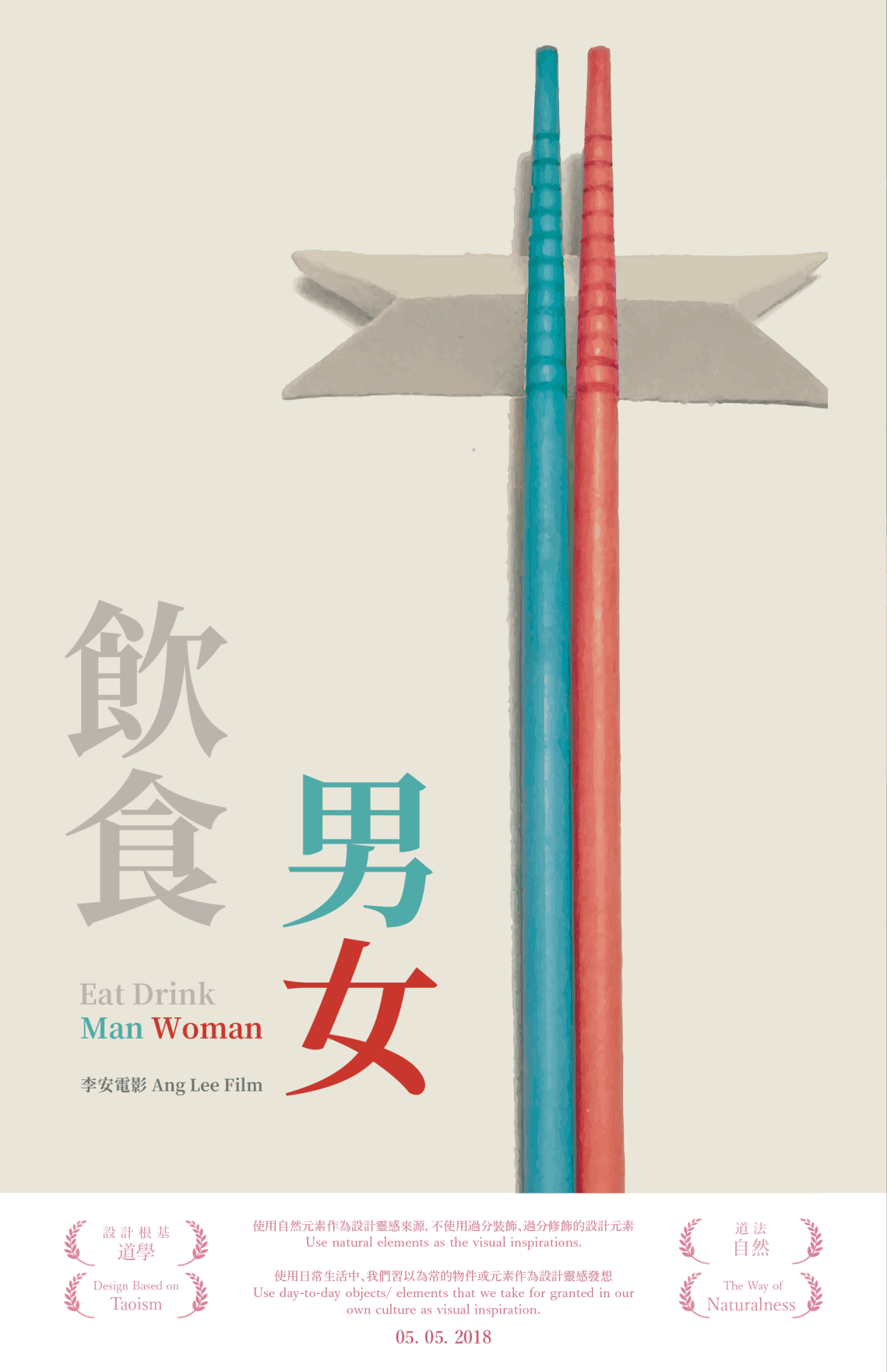
Eat Drink Man Woman by Ang Lee (1994)
Principle #7. The Way of Naturalness
・Use natural elements as the visual inspirations.
・Use day-to-day objects/ elements that we take for granted in our own culture as visual inspiration.
・Use day-to-day objects/ elements that we take for granted in our own culture as visual inspiration.
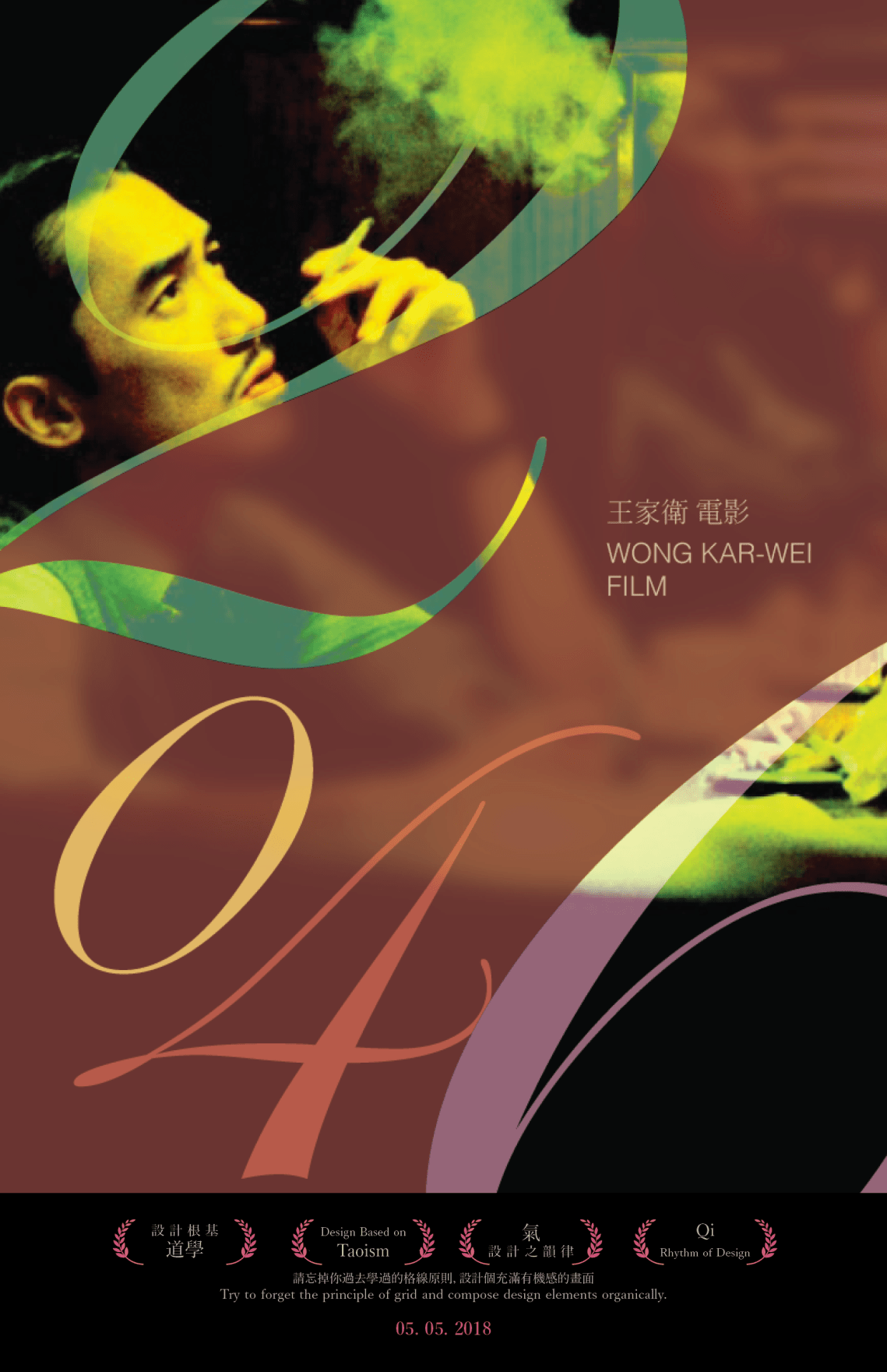
2046 by Wong Kar-wei (2004)
Principle #8. Qi: Rhythm of Design
Forget the principle of grid and compose design organically.
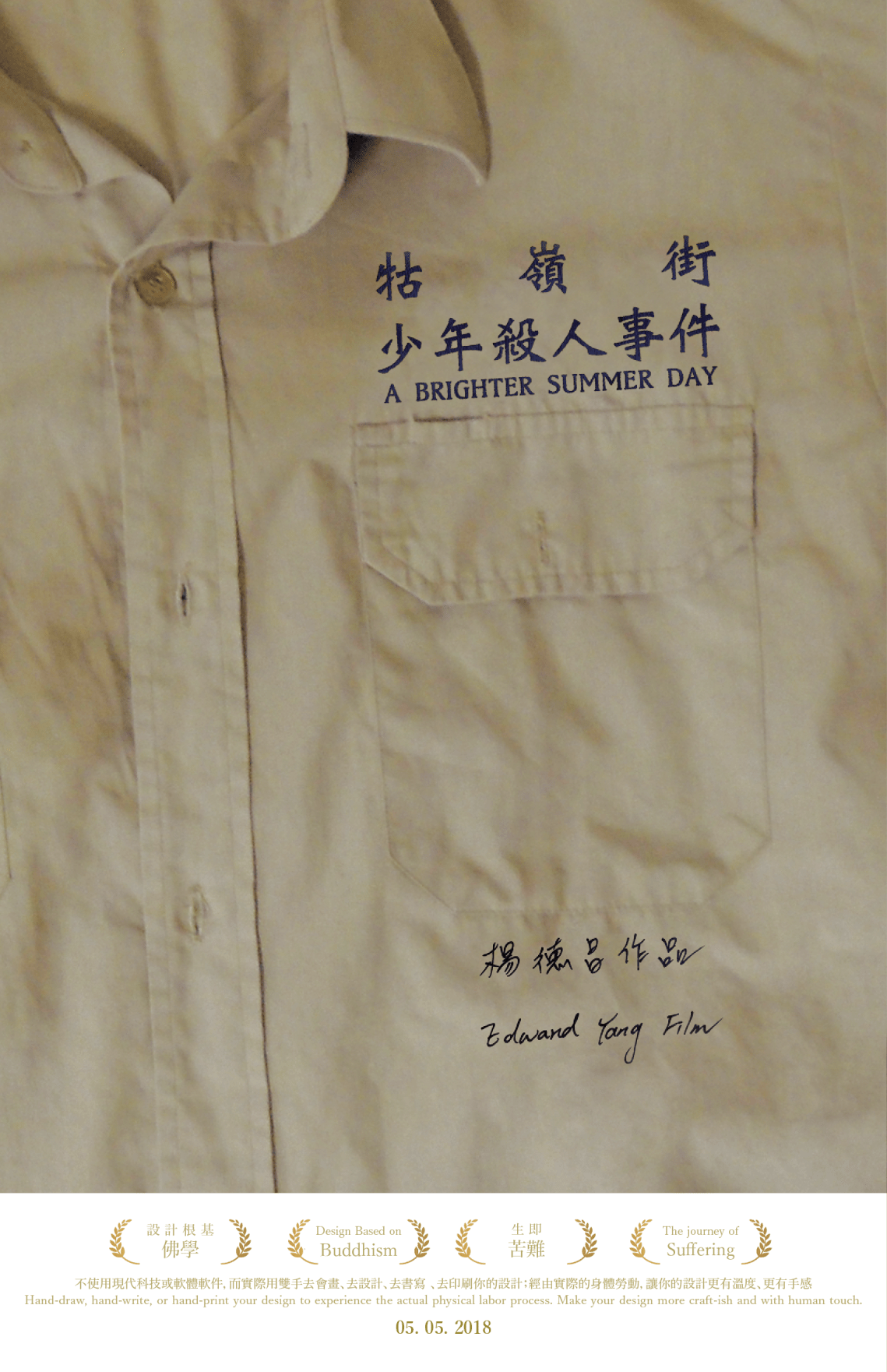
A Brigher Summer Day by Edward Yang (1991)
Principle #9. The Journey of Suffering
Hand-draw, hand-write, hand-print your design to experience the actual physical labor process. Make your design more crafting and with more human touch.
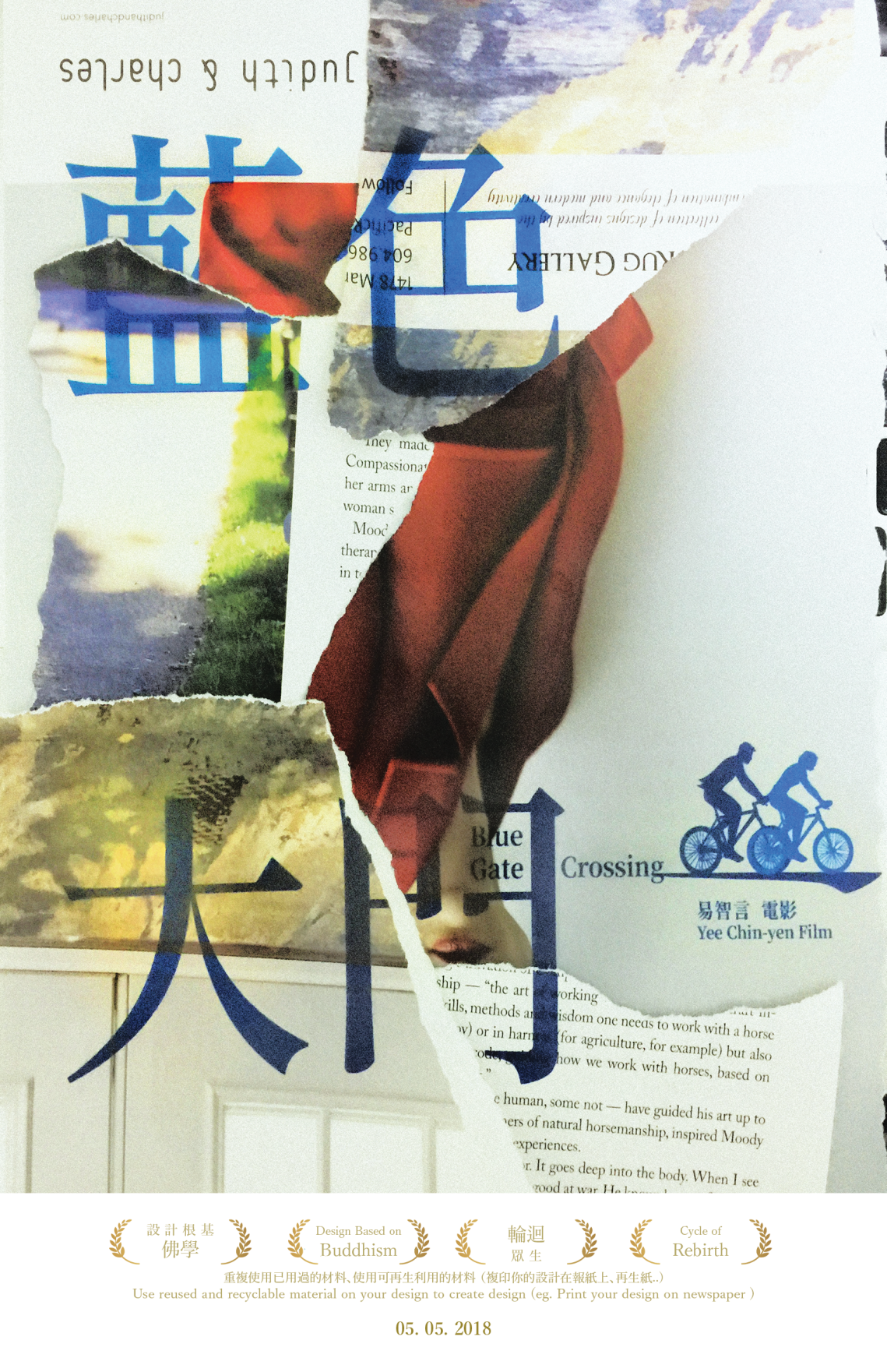
Blue Gate Crossing by Yee Chin-yen (2002)
Principle #10. Cycle of Rebirth
Use reused and recyclable material on your design to create design (eg. Print your design on newspaper)
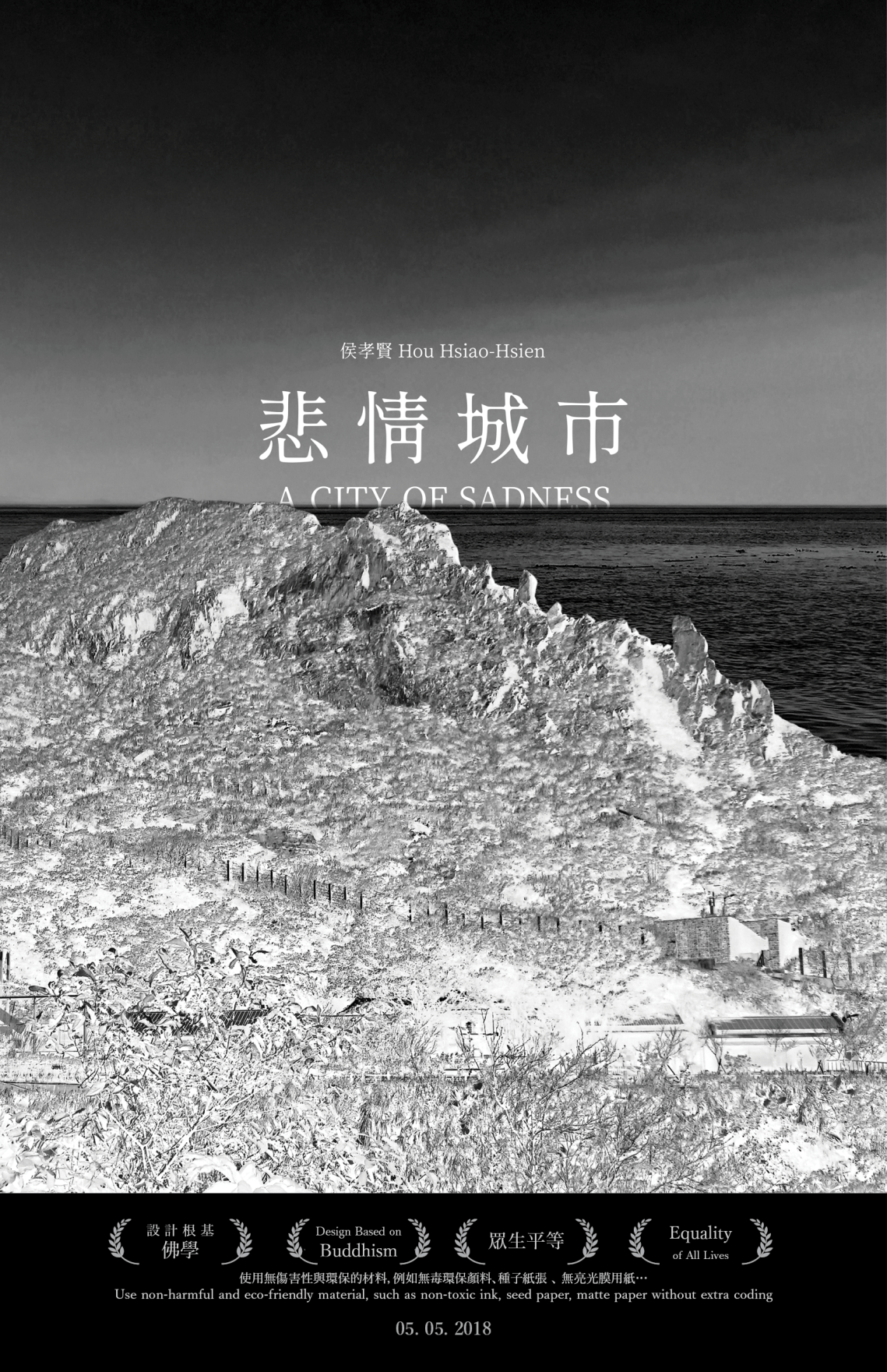
A City of Sadness by Hou Hsiao-Hsien (1991)
Principle #11. Equality of All Lives
Use non-harmful and eco-friendly material, such as non-toxic ink, seed paper, matte paper without extra coding.

Crouching Tiger Hidden Dragon by Ang Lee (2000)
12. Nirvana of Design: Emptiness
Minimize unnecessary information and element to enlarge the negative/ white space of your design.

 SHARON Y. YU | Design & Art
1 Comment